
GDS vs NDC: What Travel Agencies Need to Know in 2026
GDS vs. NDC: What Travel Agencies Need to Know
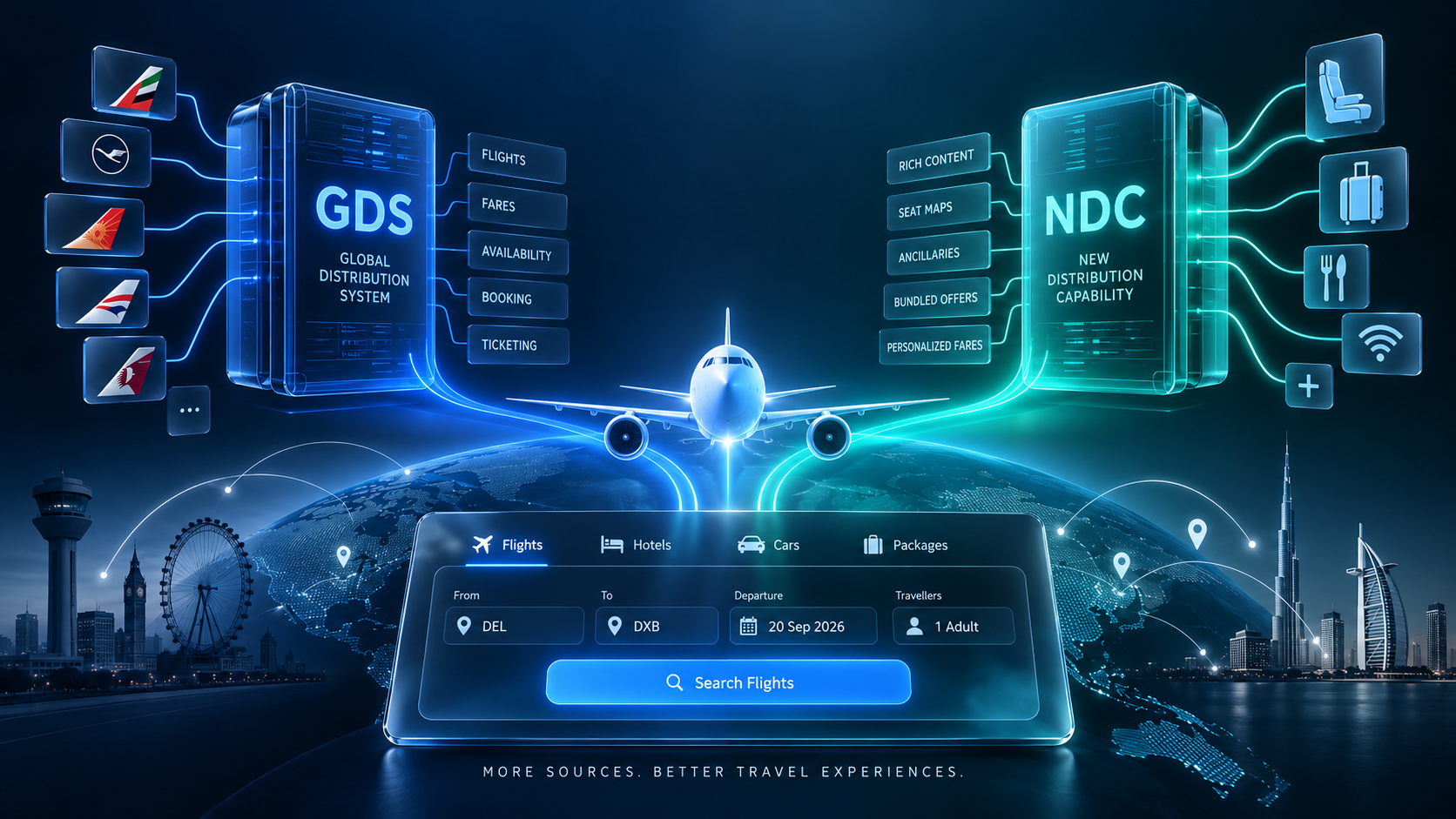
Understanding GDS vs NDC starts with knowing that they are not simply competing technologies. Both play an important role in modern airline distribution, but they work in different ways. A GDS provides travel agencies with access to flight content from multiple airlines through a centralized distribution network, while NDC enables airlines to offer richer and more flexible content through modern API-based connections. Understanding the difference helps travel agencies choose the right technology for their booking platform and business needs.
What NDC Changes
NDC (New Distribution Capability) is IATA's newer XML-based standard, built to give airlines more control over how their content is displayed and sold through third parties. Instead of forcing offers into the old GDS format, NDC lets airlines push richer content — seat maps, bundled fares, loyalty-tier pricing, dynamic ancillaries — directly to agents and booking platforms in something closer to what you'd see on the airline's own site.
For agencies, this means access to fare classes and bundles that may not even exist in the traditional GDS feed, plus better margins in some cases since airlines increasingly incentivize NDC bookings over legacy GDS distribution.
The Core Differences
GDS | NDC | |
|---|---|---|
Data format | Legacy EDIFACT-based | Modern XML/API-based |
Content depth | Standardized, limited ancillaries | Rich, airline-specific offers |
Airline control | Low — same format for all | High — each airline customizes |
Integration effort | One connection, broad reach | Per-airline or aggregated certification |
Maturity | Established, stable | Still expanding across carriers |
Neither one is "winning" outright. GDS still covers the widest supplier base in one connection, and NDC is where airlines are investing their newest content. Agencies that rely on only one are leaving either reach or margin on the table.
Why This Matters for How You Book
The practical challenge isn't understanding the difference — it's connectivity. Every airline that goes NDC does so on its own timeline and its own certification process. An agency trying to support this natively either sticks to GDS-only content and misses newer fares, or takes on the engineering work of certifying against each airline's NDC feed one at a time.
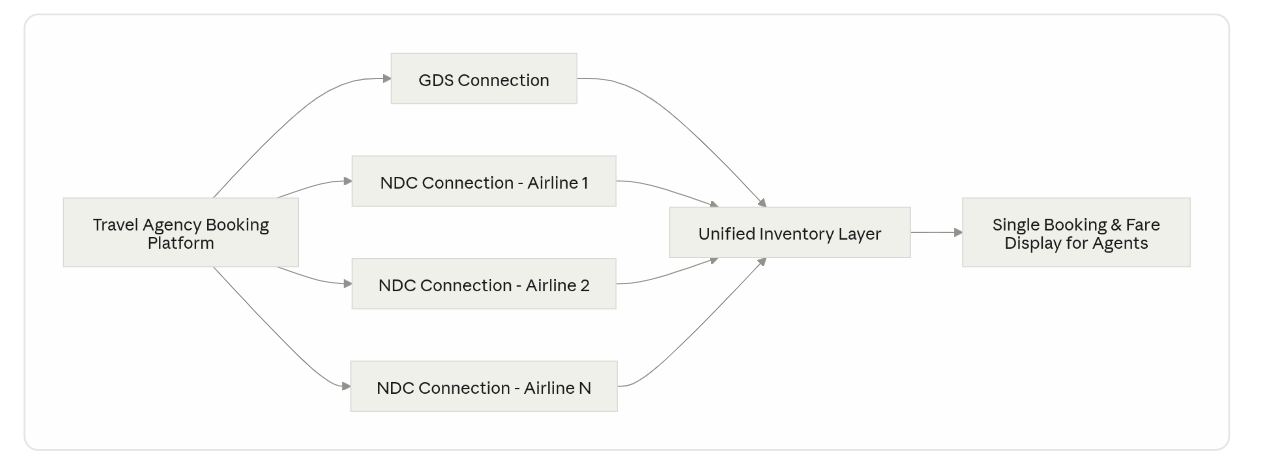
This is where a lot of agencies get stuck — not because the concept is complicated, but because maintaining parallel connections to a GDS and multiple NDC-certified carriers is a real integration burden if you're building and maintaining it in-house.
How Agencies Are Solving This
The direction most modern booking platforms are heading is toward a single connectivity layer that normalizes both GDS and NDC content into one interface, so agents don't need to know or care which pipe a fare came from. That's the model behind platforms built for multi-supplier travel distribution: one login, one search, one booking flow, regardless of whether the fare is sourced through legacy GDS rails or a newer NDC feed.
This is also the kind of system architecture Teenva AI & Digital Ventures works on with travel and OTA clients — building booking engines and integration layers that connect GDS, NDC, and other supplier APIs into a single, consistent booking experience rather than a patchwork of separate connections agents have to juggle manually.
The Takeaway
GDS and NDC aren't rivals — they're two different pipes into airline inventory, each with strengths the other doesn't fully cover. The real competitive edge for a travel agency isn't picking one over the other; it's how seamlessly both are unified behind the booking experience your agents and customers actually use.
Looking to connect GDS and NDC into one booking platform instead of managing them separately? Teenva AI & Digital Ventures builds and integrates travel booking engines, supplier connections, and distribution layers for travel agencies and OTAs. Reach out at sales@teenvaai.com, call +91 9572020107, or visit teenvaai.com to talk through your integration needs.