

Time lost
Agents juggle GDS tabs, extranet logins, WhatsApp threads, and Word templates, real focus that's hard to protect when the phone won't stop ringing.
A 30-minute live walkthrough, on your calendar, in your timezone.
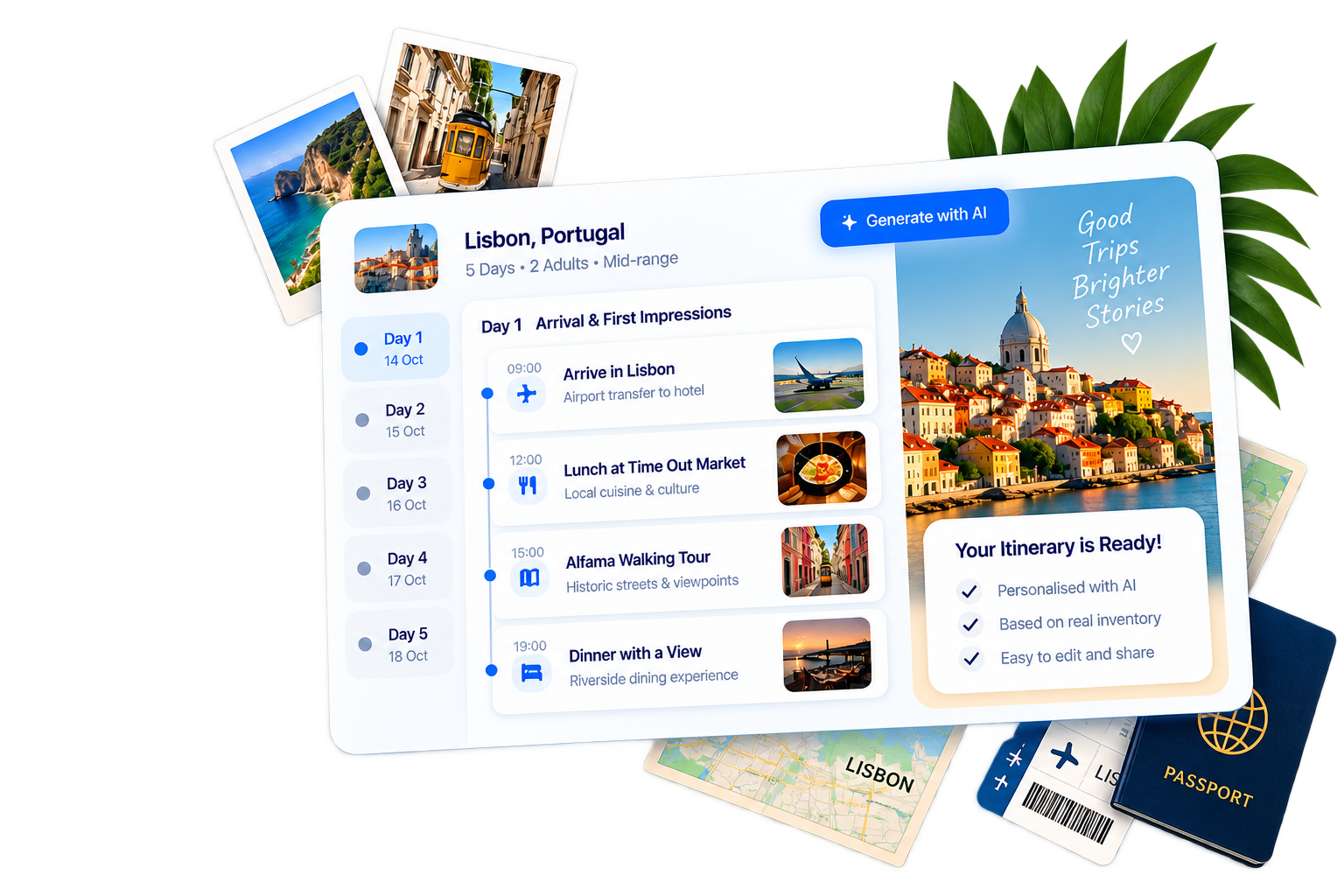
Agents juggle GDS tabs, extranet logins, WhatsApp threads, and Word templates, real focus that's hard to protect when the phone won't stop ringing.
Two agents, same brief, two different itineraries, formatting, depth, and forgotten details that don't read like the same agency.
Sunset cruises, day trips, and insurance lines get skipped when quotes are rushed out the door at 9pm.
Travelers book with whoever responds first with something considered, every extra day in the inbox is a lost conversion.
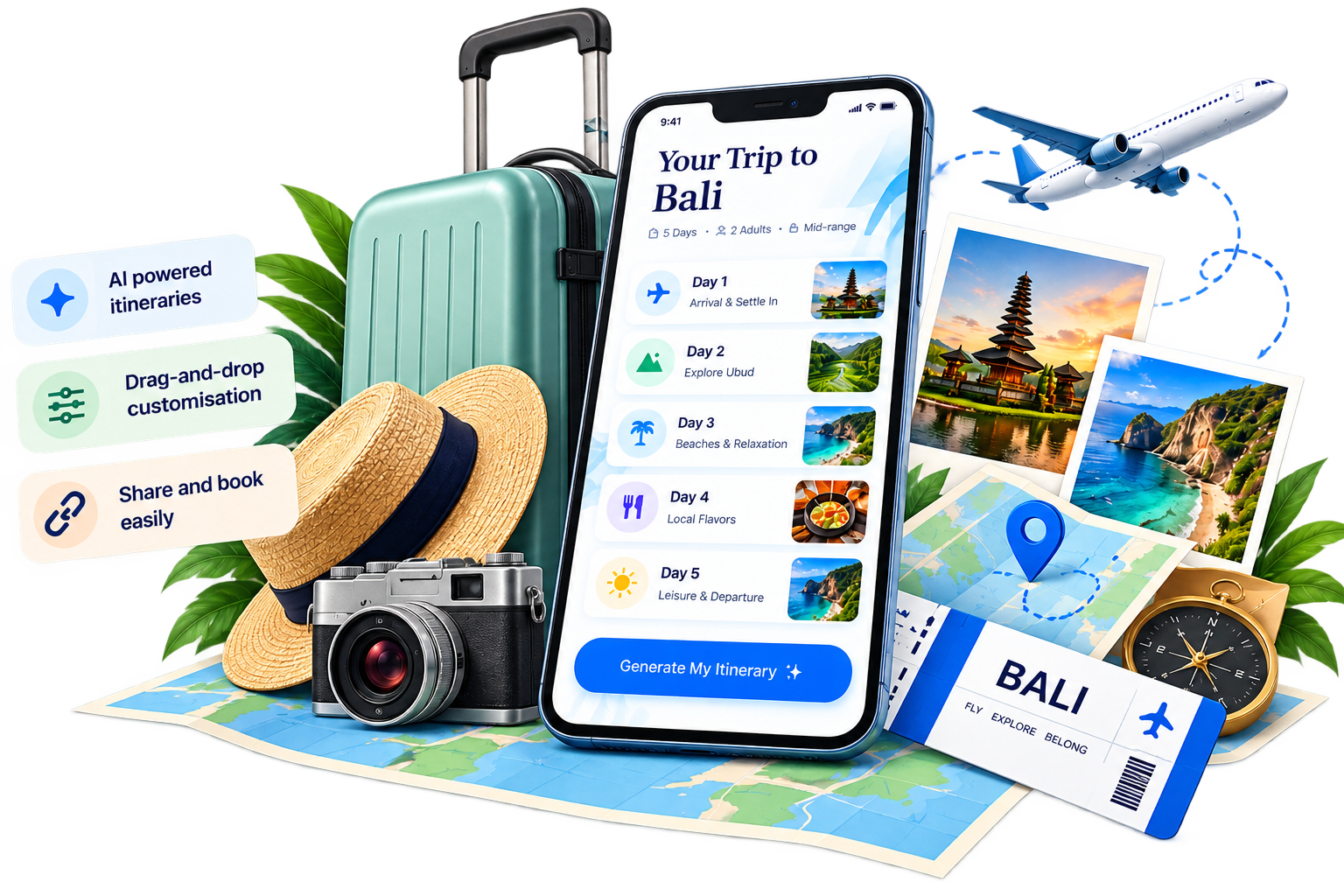
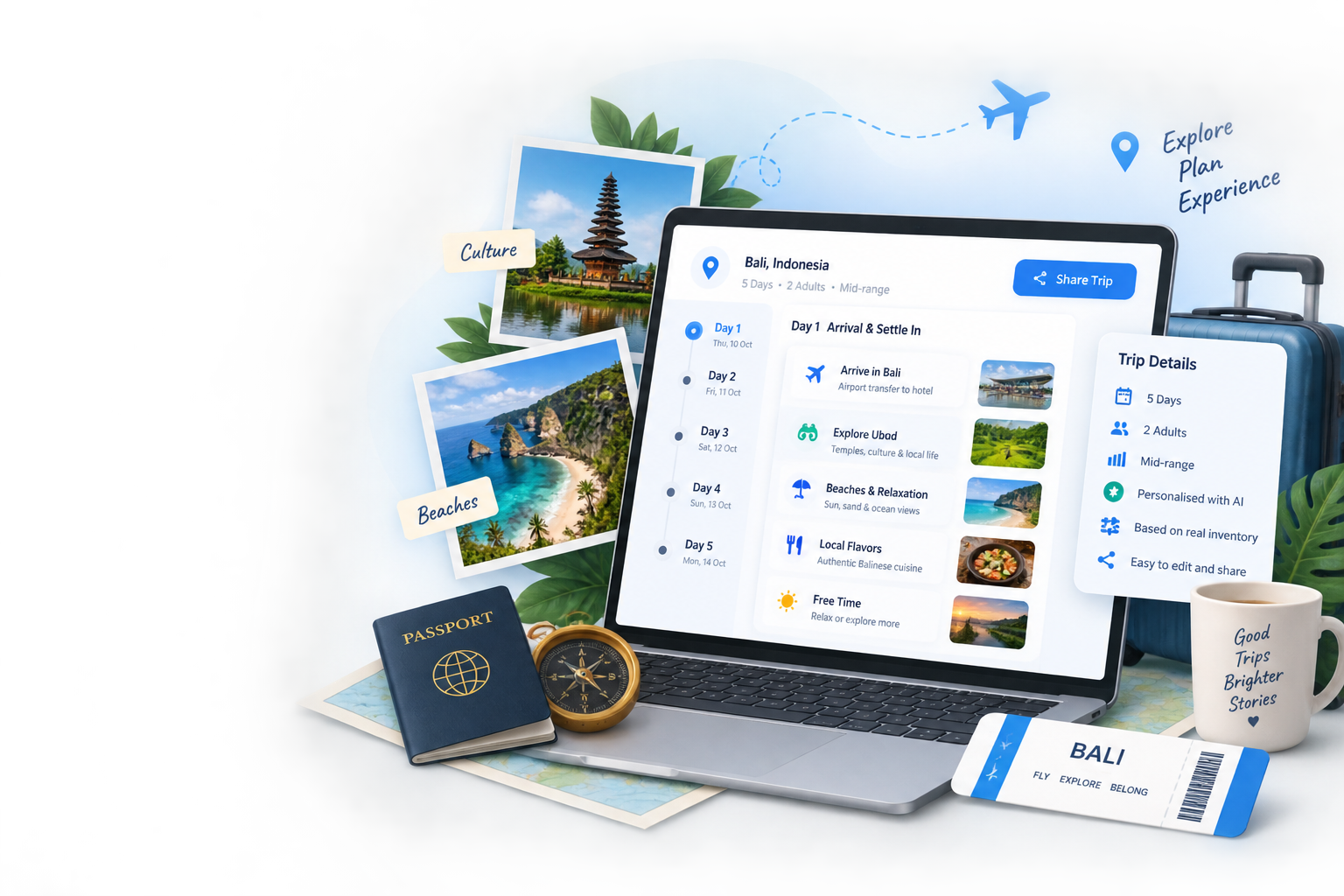
It's a quoting and planning layer that sits between the trip brief and the "send" button. An agent, or a traveler, for agencies that expose it directly on their own site, enters where someone wants to go, the travel dates, a budget band, who's travelling, how packed the days should feel, and what they actually care about: food, culture, adventure, beaches, nightlife, wellness, some mix of all of it. The system returns a full day-by-day itinerary within seconds.
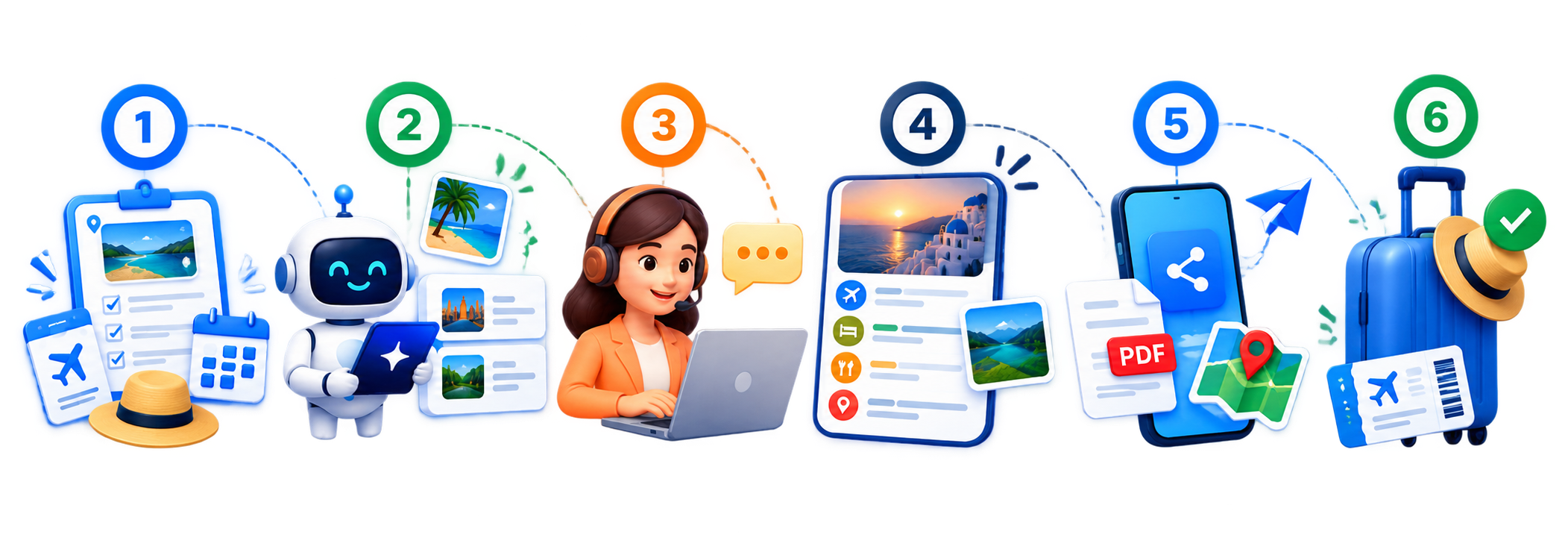
From brief to booking, in six steps
Destination(s), travel dates, budget band, travel party (solo, couple, family, group), pace (relaxed, balanced, packed), and interests. Takes under a minute for a straightforward trip.
Morning, afternoon, and evening blocks per day, with suggested activities, restaurants, transit notes between stops, and deliberate free-time buffers so the trip doesn't feel over-scheduled.
Drag and drop to reorder days or activities, swap out any AI suggestion for something else, add the agent's own local knowledge, and apply markup or commission before anything goes out.
A sunset cruise slotted into a free evening, a day trip flagged for a longer stay, travel insurance suggested where it naturally belongs, placed, not pushed.
A branded, mobile-ready link or a PDF export, complete with maps, timings, and live booking status against each item.
Accepted items move toward booking without re-keying anything the system already knows.
Full day-by-day drafts in seconds from a short structured brief, not a blank canvas.
See howReorder days and activities, swap any AI suggestion, insert the agent's own picks.
See how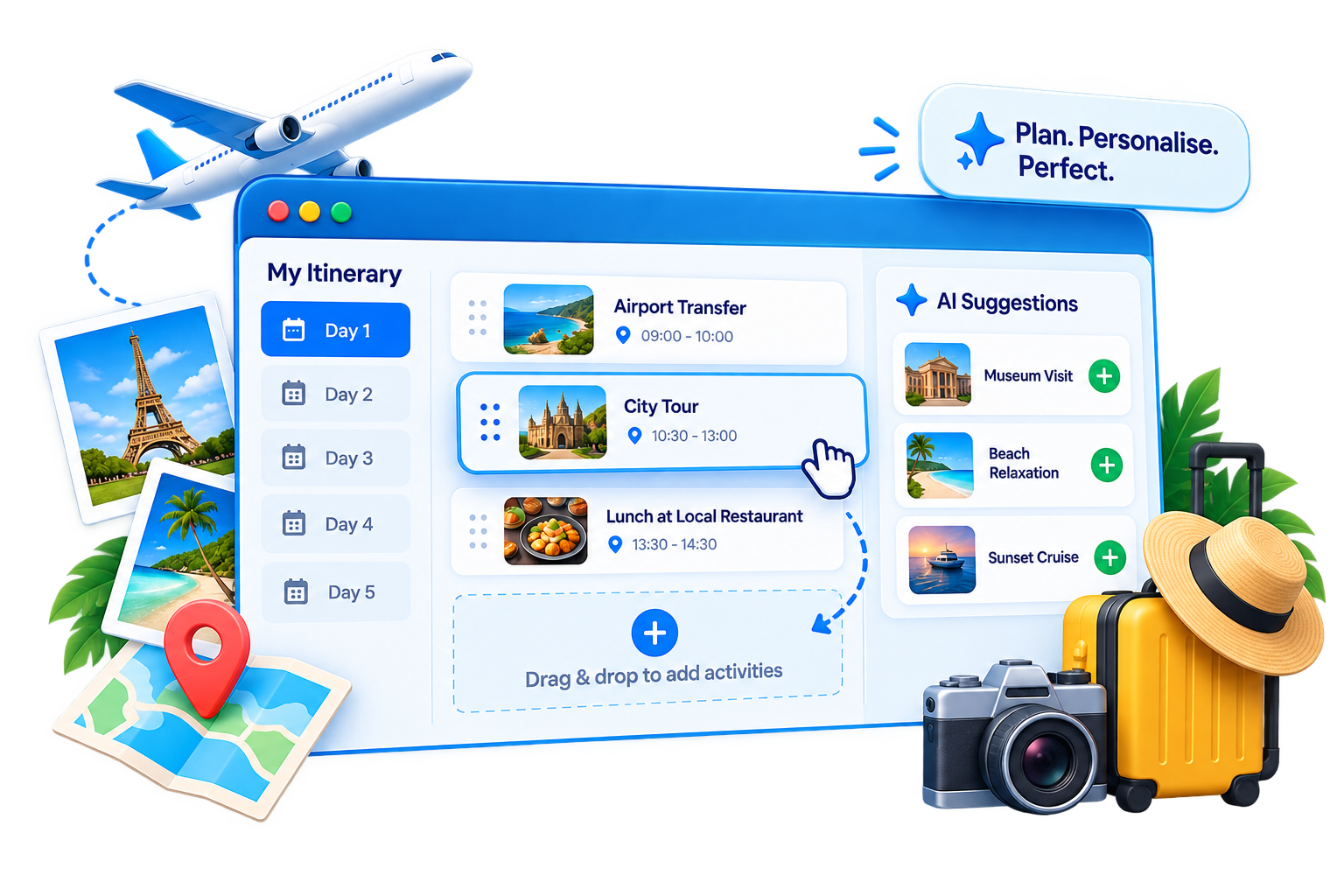
Drafts against connected flights, hotels, and activity feeds where available, with per-item booking status.
IntegrationsMobile-first link and downloadable PDF, with maps and timings baked in, under the agency's own brand.
See featuresFlags natural add-on moments, a cruise, a day trip, insurance, without turning the itinerary into a sales page.
See howItineraries render in the traveler's language and currency, built for inbound and outbound agencies alike.
Trip typesDrop it into an existing agency website or OTA as a quoting tool, or run it natively inside Teenva Travel CRM.
Travel CRMSee which itineraries convert to bookings, build-time saved versus manual planning, and the destinations and interests coming up most often.
See featuresFrom family getaways to business trips, Teenva AI helps you plan, book, and manage seamless travel experiences — for every traveler, every time.

More Memories Together
Balanced pace, interests set to beaches and food, activity blocks spaced to allow for kids needing downtime, and a shortlist of family-friendly restaurants rather than a fine-dining crawl.
Explore Family Trips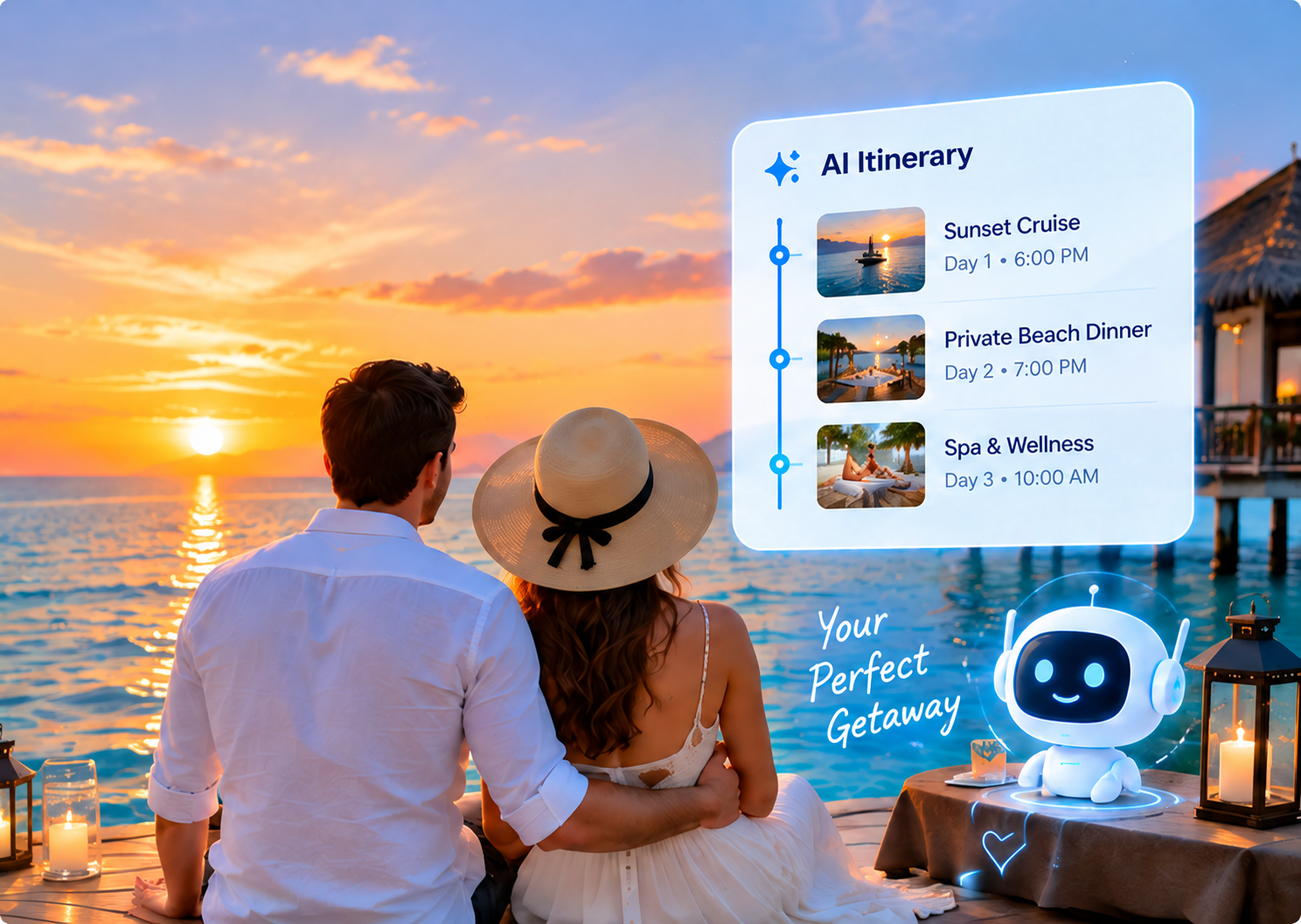
With You Anywhere
Relaxed pace, later starts, quieter beaches and spa slots over crowded landmarks, and evening blocks that lean toward a nice dinner rather than a packed activity list.
Discover Honeymoon Packages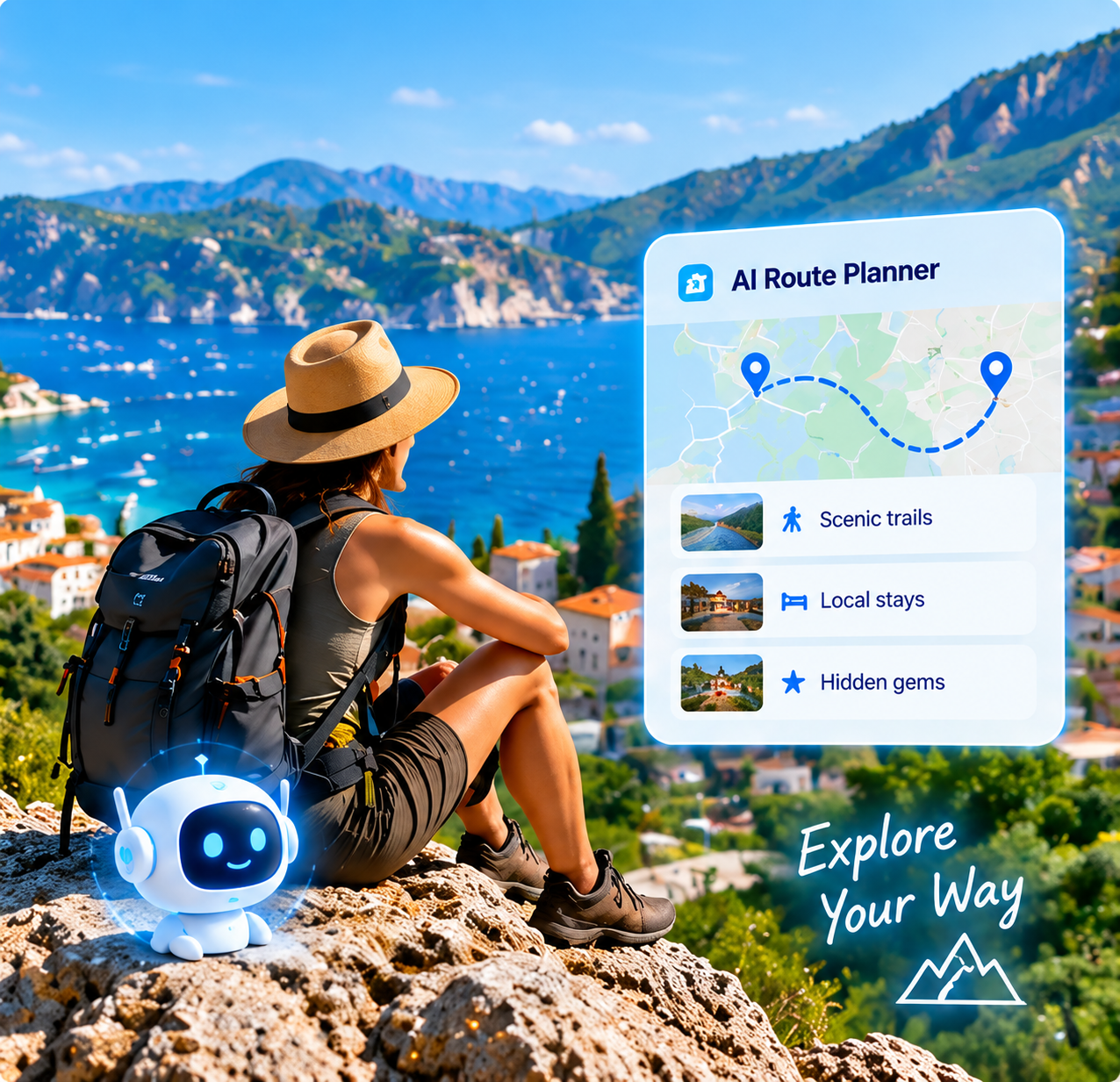
Explore Your Way
Packed pace, tighter budget band, hostel-adjacent activity clusters, and transit notes written for someone getting around on foot or public transport rather than a private car.
Plan a Solo Trip
Travel Brings Teams Closer
Larger party size, structured morning blocks that leave room for sessions or briefings, team-friendly afternoon and evening activities, and itinerary formatting that stays consistent across every group member's copy.
Plan Group Travel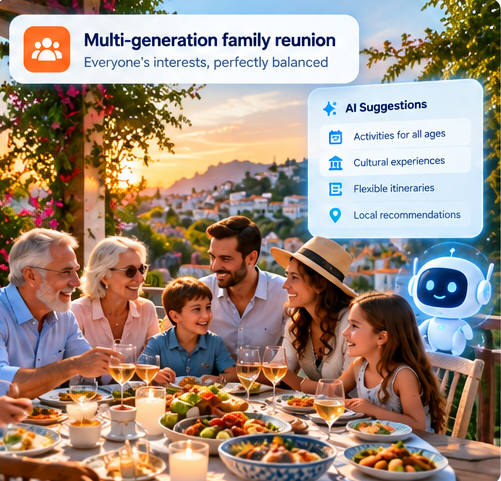
Generations Travel Better Together
Mixed interests reconciled in the same day, culture and slower sightseeing for grandparents, adventure activities for teenagers, with generous free-time buffers so nobody's forced onto an itinerary that doesn't fit them.
Plan a Reunion Trip
Turn a walk-in or WhatsApp enquiry into a sendable quote the same day, without every agent needing five years of destination knowledge in their head.
Get in touch
Draft variations of a package fast, same core route, different pace or interest mix, instead of rebuilding the itinerary document from scratch for every enquiry.
How it works
Ground itineraries in real local inventory and hand agents overseas a document they can present as their own, branded end-to-end.
Key features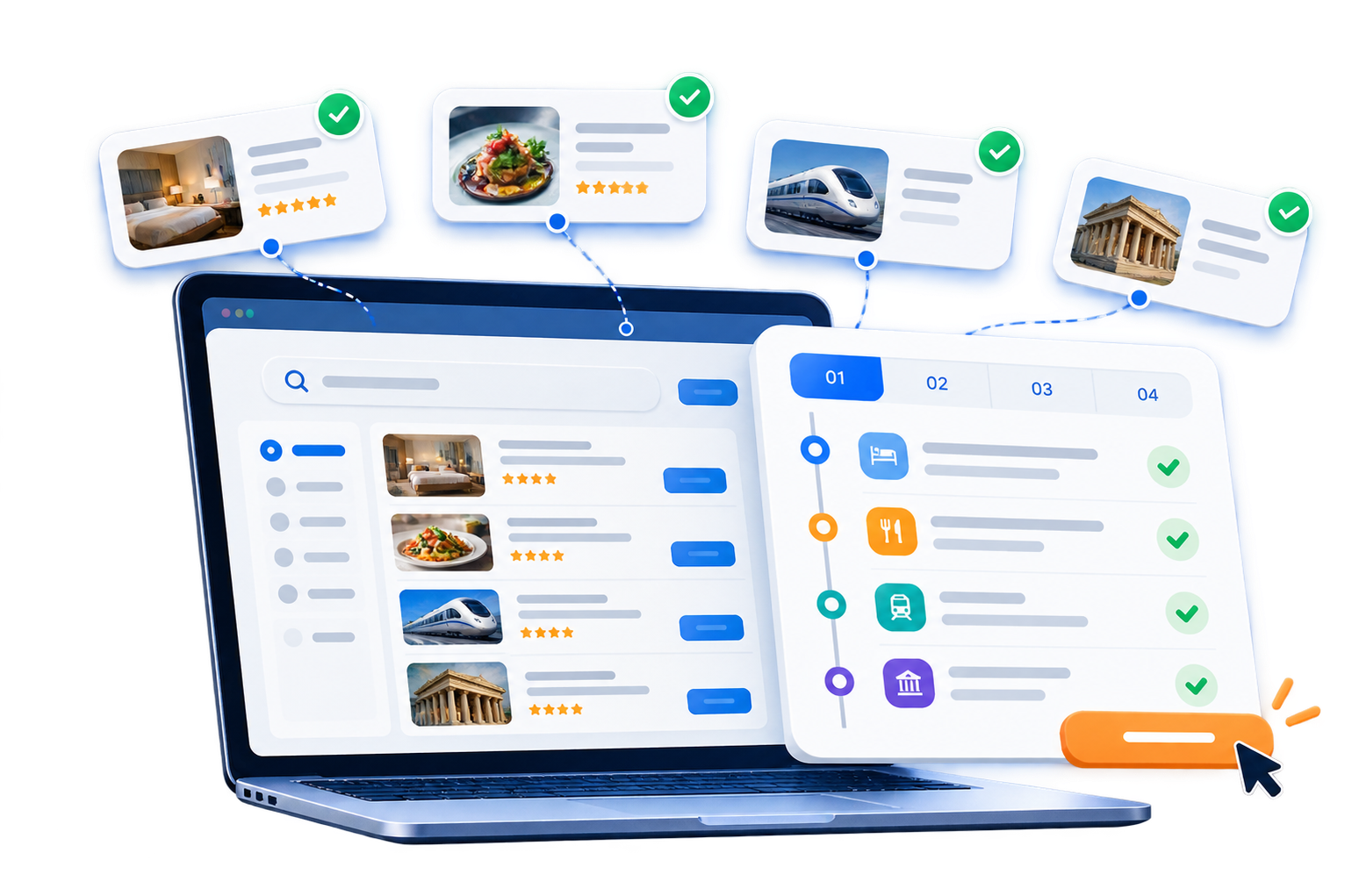
Add a planning layer on top of a booking engine so browsing turns into a considered itinerary, not just a cart of separate line items.
Travel Portal
Standardise how incentive trips and offsites get quoted, so every stakeholder sees a consistently formatted plan regardless of who built it.
Trip typesThe models, prompts, and grounding logic are built around how trips actually get planned and sold, not a general-purpose chatbot pointed at a travel use case.
Where flights, hotels, or activities are connected, the itinerary reflects what's actually bookable, not a plausible-sounding guess.
Works standalone, inside Teenva Travel CRM, or alongside a Ready-to-Launch Travel Portal, pick the combination that matches how your team already sells.
Teenva AI has spent years in travel technology, GDS integrations, booking engines, portals, before building AI on top of it. This isn't a side project for a generalist AI vendor.
Model updates, inventory connections, and feature requests are handled by a team that stays engaged after go-live, not one that disappears after the invoice clears.

The itinerary builder isn't a closed box. Inventory hooks connect to flight, hotel, and activity APIs and GDS-aware feeds where an agency has them, so the "live inventory awareness" in Key Features is a real connection, not a marketing phrase. Where an agency runs Teenva Travel CRM, the itinerary hands off directly into the lead and booking pipeline, no exporting a PDF and re-entering it somewhere else. Where an agency runs a Ready-to-Launch Travel Portal, the builder can sit behind the portal's quote or "plan my trip" flow. And for agencies that need payment or booking-engine handoff wired into the itinerary send step, that's a configuration decision made once during setup, not a manual step an agent repeats every time.
For anything beyond the standard connectors, a proprietary supplier API, a legacy back-office system, a custom GDS profile, our broader AI solutions and travel technology practice builds the integration as part of onboarding.
Explore
Straight answers about our services, how we work, and how to get started with Teenva.
Custom software, AI solutions, and travel technology — built for teams that need more than templates.
Where an agency has flights, hotels, or activities connected, through GDS-aware feeds or direct supplier APIs, the itinerary drafts against that live inventory, including booking status per item. Without a connection, it still produces a structured, destination-specific plan, but the live-inventory grounding is what separates it from a generic AI travel wrapper. See Integrations for how connections are set up.
Yes. Shareable links and PDF exports carry your agency's branding, not Teenva's. This matters especially for DMCs handing itineraries to overseas partner agencies who present them as their own.
30 minutes, live. We build a real itinerary for a destination of your choice while you watch, then show you the drag-and-drop editor and the export/share flow. Request a demo to schedule a slot.
No. The interface is built for travel agents and consultants, not developers, entering a trip brief and editing the resulting itinerary takes the same skills as building a quote in a document editor. Any API or inventory connections are set up once during onboarding by our team.
It works standalone. If you already run Teenva Travel CRM, the itinerary builder becomes a step inside that pipeline instead of a separate tool, leads, itineraries, and bookings stay in one place. Agencies without a CRM yet can start with the itinerary builder alone and add the CRM later.
The builder is multi-language and multi-currency aware, so outbound agencies quoting international trips and inbound agencies serving foreign travelers can both present itineraries in the traveler's own language and currency.
Every AI-drafted item can be reordered, swapped, or replaced. Agents regularly drop in a favourite local guide, a restaurant the AI wouldn't have surfaced, or a hotel relationship they already have, the AI draft is a fast starting point, not a locked output.
Yes. It runs as an embeddable widget on an existing website or OTA, or entirely standalone through shareable links, a website isn't a prerequisite. Agencies planning to build one can pair it with a Ready-to-Launch Travel Portal.
Tell us a bit about yourself.
We'll follow up to schedule a live walkthrough of the product.