
The Role of ERP in Supply Chain Management: Benefits & Uses
Efficient supply chain management is critical to business success, whatever the size of the company, and ERP in supply chain management is now the most practical way to achieve it. Enterprise resource planning (ERP) systems help businesses coordinate the long chain of activities that turns raw materials into finished products and delivers them to customers. By bringing demand planning, procurement, manufacturing and distribution onto one platform, ERP helps companies meet customer demand while keeping costs under control.
What Is the Role of ERP in Supply Chain Management?
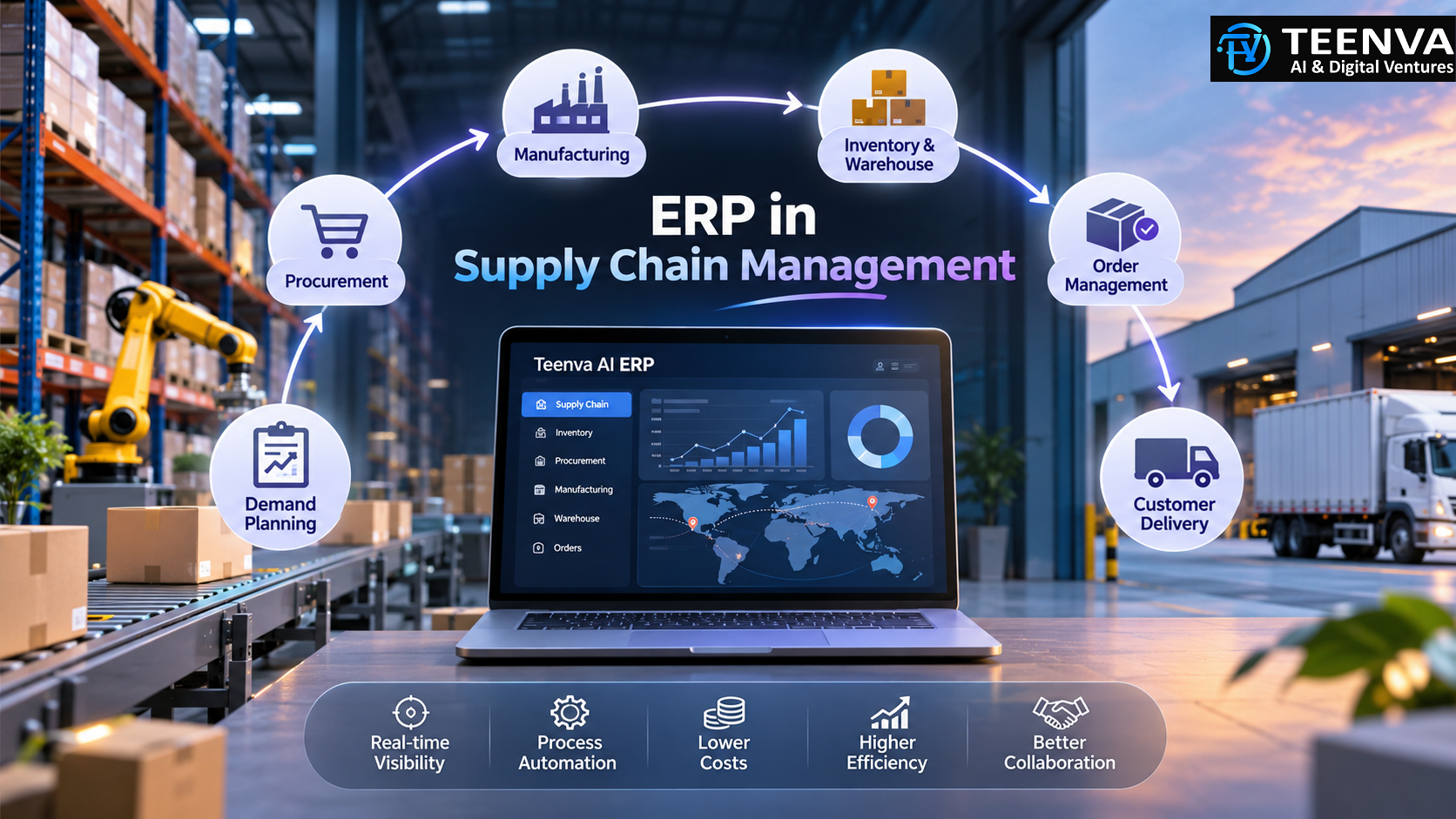
An ERP system is an all-in-one software suite that can run almost every part of a business, including the supply chain: analyzing demand, sourcing materials, manufacturing products and delivering them to customers. Using ERP in supply chain management means modern platforms bring modules for planning, procurement, manufacturing, inventory, warehouse and order management. Together they let teams coordinate, streamline and automate these steps so demand is met consistently and operating costs stay low.
Because all business data lives in a single database, companies see their supply chain operations alongside finances and other key information. Built-in integration between modules means sourcing and production can be planned around real customer demand, and it removes the headache of stitching together separate applications for each supply chain function. Automation adds further savings in time and cost while lowering the risk of human error.
Better information flow also makes teams more collaborative. A procurement manager with accurate data on supplier contracts, capacity and customer demand can buy the right quantity of materials. A logistics leader with a full view of performance can spot where efficiency can be gained.
How ERP connects the supply chain
Key takeaways
ERP systems with supply chain capabilities help businesses match supply to demand, cut operating costs and react quickly to change.
Core modules automate planning, procurement, inventory, warehouse and order management.
A unified view of business data removes most application integration problems.
Benefits of Using ERP in Supply Chain Management
The benefits of ERP in supply chain management are clear when essential tasks such as demand planning, sourcing, manufacturing and order management run on one platform, the benefits add up quickly.
Improved efficiency. Automation and cross-chain visibility help stakeholders make quick, informed decisions to reduce costs in manufacturing, logistics and procurement.
Increased customer retention. Integrated data leads to better planning, tighter production schedules and more accurate delivery estimates. Keeping promises consistently builds loyalty.
Workflow automation. Data moves automatically between departments. For example, purchasing can be alerted the moment stock of a key material drops below a set threshold.
Reduced overhead and operational costs. With clear insight into supply and demand, you can buy just enough stock, saving warehouse space. Automation also cuts administrative costs and costly ordering mistakes.
Fewer IT issues. No more integrating data from different vendors or learning multiple applications. Every module shares the same real-time data.
Flexible supply chain solutions. Predictive analytics and scenario planning help you spot risks, such as supplier capacity shifts or route changes, before they hit operations.
Fewer bottlenecks. Each step depends on the one before it. ERP highlights potential bottlenecks early, alerts the right teams and allocates resources to keep orders on time.
13 Ways to Use ERP to Improve Supply Chain Management
ERP in supply chain management can strengthen every stage, from planning to final delivery.
Planning. Forecast inventory and production needs using historical demand, seasonality and sales forecasts. Schedule manufacturing to match customer orders and make sure labor, machinery and materials are ready.
Purchasing. Replace manual, paper-based steps with automated approvals. Better purchase order tracking shows what has been ordered and when it will arrive.
Procurement. Manage the whole process centrally, from vetting suppliers and handling bids to tracking orders. Orders go to pre-approved suppliers on negotiated terms, and dashboards show spending and supplier performance in real time.
Supply chain execution. Coordinate inventory, manufacturing resources and logistics so work finishes and ships on time, with visibility from sales order to fulfillment.
Monitoring. Instead of manually pulling data from many systems, use real-time dashboards across the whole chain and react fast to late deliveries or equipment breakdowns.
Maintenance. Track equipment utilization, schedule maintenance to avoid downtime and monitor asset costs.
Measurement. Use customizable dashboards and reports to follow KPIs such as production cycle time, inventory levels and supplier performance.
Inventory management. Keep the right stock to feed production and fulfill orders. The system can prompt reorders based on seasonal sales, forecast demand, supplier lead times and current stock.
Warehouse management. Optimize space, monitor stock, track productivity and speed up picking and packing.
Material requirements planning (MRP). Work out which materials are needed and when, and test scenarios such as different shipping locations to optimize production and delivery.
Collaboration and communication. Procurement, production, sales and inventory teams share one database, so updates are instantly visible. Portals let suppliers and customers track order status.
Vendor performance assessment. Compare suppliers on lead time, on-time delivery, order accuracy and cost to choose partners who consistently deliver.
Global visibility. Follow raw materials, subassemblies and finished goods from supplier to warehouse, through production and on to the customer.
Implementing Supply Chain Management and ERP Integration
Choose an ERP solution that fits your needs in functionality, scalability and implementation complexity. For many businesses, cloud ERP is a better fit than on-premises software: there is no on-site hardware to buy and maintain, it scales easily, and staff can work from anywhere with an internet connection.
Whether you are switching systems or implementing ERP for the first time, plan for future growth as well as today's needs. Companies that source or sell internationally should look for support for multiple languages, currencies and tax regimes. If you need specialized supply chain applications, check that they integrate with your ERP. Also consider future needs such as robotics integration and AI-based predictive analytics.
Improve Supply Chain Management With Teenva AI
Teenva AI delivers ERP in supply chain management as one connected platform that helps companies analyze demand, allocate resources and schedule production to meet customer needs while controlling costs. Production data, financials, inventory and orders update in real time, so procurement, planning and production teams always work from the same information.
Demand planning and inventory: predict demand and build replenishment strategies that maximize product availability and sales.
Procurement: streamline purchasing, communicate with suppliers and improve order accuracy.
Manufacturing: schedule labor, machinery and materials to optimize production, for small businesses and large enterprises alike.
Global operations: manage multiple subsidiaries from a single system.
Even small organizations face the complexity of sourcing, production and shipping in a globalized economy. By integrating and automating each step, from demand planning to distribution, Teenva AI helps you meet customer demand while reducing cost.
Supply Chain in ERP: FAQs
Is supply chain management part of ERP?
Leading ERP systems typically support supply chain management, including planning, procurement, manufacturing, inventory and order management. They also cover other functions such as finance, payroll and customer relationship management (CRM).
How does ERP affect supply chain management?
ERP supports key processes from planning and procurement to logistics, and increases efficiency through integration and automation. Global visibility leads to better decisions and lower costs.
How does ERP fit with ecommerce and supply chain management?
Ecommerce retailers must source, store, deliver and handle returns, often across a global network. ERP helps optimize inventory, warehousing and logistics so retailers meet customer expectations while controlling costs.
What can ERP do for your supply chain?
It brings visibility and automation. Real-time data helps stakeholders make better decisions from procurement to inventory, while automation saves time and cost and reduces human error.
What does ERP stand for in a supply chain?
ERP stands for enterprise resource planning: all-in-one business software that manages functions from payroll and production to sales, and supports planning, procurement, inventory and manufacturing.
Is ERP the key to supply chain success?
Supply chains can be very complex, especially with large supplier networks. ERP makes processes more scalable, efficient and easier to manage by integrating data, automating key tasks and improving visibility.
How can ERP systems improve supply chains?
By consolidating supply chain data into a real-time, holistic picture, ERP lets businesses act quickly on challenges. Automation speeds up responsiveness while reducing administrative burden and errors.
Ready to simplify your supply chain? Talk to the Teenva AI team about a free product tour.