
How Does SiteMinder Work? A Step-by-Step Guide for Hotels
Hotels shopping for distribution technology often run into the same wall: a channel manager gets recommended everywhere, but nobody explains what actually happens between a guest clicking "Book Now" and a room disappearing from every other sales channel. SiteMinder is one of the more widely used platforms in this space, and understanding its mechanics is useful even if you never touch the product directly — because the underlying pattern (booking engine → channel manager → PMS, wired together over APIs) is the same pattern most modern hotel tech stacks are built on.
This guide walks through how SiteMinder's pieces fit together, the order in which data actually moves, and where the integration points sit — useful context whether you're evaluating the platform or building something that needs to talk to it.
The Three Layers Involved
Before tracing a booking end to end, it helps to separate three components that get lumped together in casual conversation but serve different jobs:
The booking engine — the guest-facing widget embedded on the hotel's own website that handles search, room selection, and payment for direct bookings.
The channel manager — the distribution layer that pushes rates and availability out to connected OTAs and pulls bookings back in, keeping every channel synchronized.
The property management system (PMS) — the hotel's operational system of record for reservations, folios, and housekeeping status.
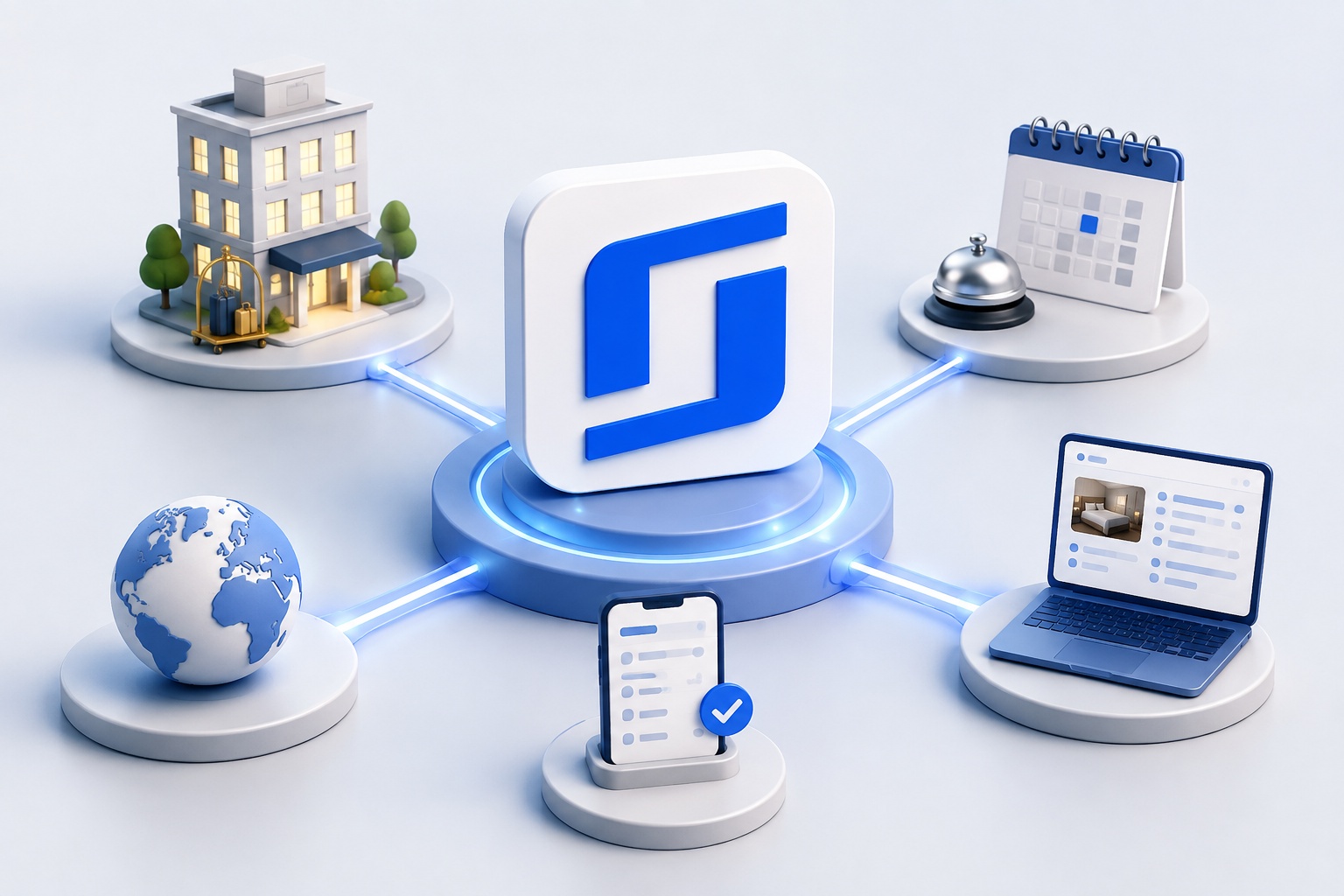
SiteMinder's core product bundles a channel manager with a booking engine and connects both to a hotel's existing PMS (its own or a third party) through an API layer, rather than replacing the PMS outright.
Step-by-Step: What Happens When a Room Is Booked
1. Inventory starts in one place. Room types, rates, and availability are set once, either directly in the channel manager dashboard or synced in from the PMS if that connection exists. This single point of entry is what prevents the classic overbooking scenario where a room gets sold twice because two systems weren't talking to each other.
2. That inventory gets pushed outward. The channel manager distributes current rates and availability to every connected sales channel — OTAs, GDS connections, and the hotel's own booking engine — using two-way API connections rather than one-directional feeds. A one-way connection can push rates out but can't pull bookings back in automatically, which is why two-way connectivity matters for real-time accuracy.
3. A booking happens on any channel. Whether a guest books through Booking.com, an OTA's mobile app, a travel agent using a GDS, or directly on the hotel's own site, that transaction gets sent back to the channel manager as soon as it's confirmed.
4. Availability updates everywhere else, automatically. The moment one channel sells a room, the channel manager decrements that inventory and pushes the update to every other connected channel within seconds. This is the mechanism that keeps a hotel from having to manually track sold-out dates across a dozen different extranets.
5. The reservation lands in the PMS. For hotels with a connected PMS, the confirmed booking flows through automatically — guest details, dates, rate, and room type all populate without front-desk staff re-keying anything. This is where the operational side (housekeeping, folios, check-in) picks up the reservation.
Where the Booking Engine Fits In
The booking engine is the only guest-facing piece in this chain — everything else operates behind the scenes. When a guest books directly through the hotel's website, that reservation still routes through the channel manager the same way an OTA booking would, which is what keeps direct and third-party inventory in sync rather than treating the hotel's own website as a separate, disconnected sales channel.
Because direct bookings carry no OTA commission, hotels generally prioritize getting guests to book on-site, but that only works if the booking engine's rates and availability are exactly as current as what's showing on Expedia or Booking.com. That real-time parity is a direct function of how tightly the booking engine is wired into the channel manager.
The Integration Layer That Makes This Work
None of the above functions without a stable API layer connecting the pieces. A few technical details matter more than they might first appear:
Two-way vs. one-way connections. A two-way integration means the PMS or channel manager can both send and receive updates — critical for real-time sync. One-way connections are more limited and typically require manual reconciliation somewhere in the chain.
Rate and availability caching. High-traffic periods generate a large volume of near-simultaneous read requests across channels. Systems built for scale typically cache current rates and availability rather than hitting the source system on every single request, then invalidate that cache the instant inventory changes.
Error handling on failed pushes. Network blips happen. A well-built distribution layer retries failed updates and flags channels that fall out of sync, rather than silently leaving a channel showing stale availability.
Authentication and data security. Connections between PMS, channel manager, and OTAs typically run over authenticated API calls (commonly OAuth-based), with payment data handled through PCI-compliant tokenization rather than passing raw card details between systems.
For teams building or evaluating their own integrations against a platform like SiteMinder, this is usually the part that takes the most engineering effort — not the guest-facing booking flow, but the reliability of the sync layer underneath it.
Why This Architecture Pattern Matters Beyond SiteMinder
The booking engine–channel manager–PMS pattern isn't unique to any single vendor. It's the standard shape of hotel distribution technology, which is exactly why it's worth understanding on its own terms rather than as one product's feature list. Hotels and OTAs building custom booking platforms, TMCs connecting multiple supplier systems, or DMCs managing inventory across property partners all end up solving the same core problems: keeping inventory synchronized in real time, handling two-way data flow without conflicts, and building a resilient integration layer that degrades gracefully when a connection drops.
Understanding how an established platform handles these problems is a useful reference point whether you're selecting a vendor or scoping a custom build.
Final Thoughts
SiteMinder's value largely comes down to synchronization: keeping a hotel's rates, availability, and reservations consistent across every channel a guest might use to book, without requiring manual updates in five different extranets. The booking engine handles the guest experience, the channel manager handles distribution logic, and the PMS handles the operational follow-through — and the API layer connecting all three is what determines whether that whole system actually holds up under real booking volume.
If you're building or integrating a hotel distribution stack — whether that's a channel manager, booking engine, or PMS connector — Teenva AI works with OTAs, TMCs, DMCs, and travel agencies on exactly this kind of API integration and booking platform architecture. Reach out at sales@teenvaai.com or call +91 9572020107 to talk through your setup.