
Shopify vs WooCommerce: Choosing the Right Ecommerce Platform
If you are launching an online store or rethinking the one you have, you have almost certainly run into the same question: Shopify or WooCommerce? Both are mature, widely used ecommerce platforms, but they are built on very different ideas. Shopify gives you a managed, ready-to-sell store. WooCommerce gives you a flexible toolkit on top of WordPress.
The right choice affects your costs, the payment methods you can offer, how much of your store you can customise, and how much technical upkeep lands on your plate. This guide compares the two across the areas that matter most, so you can decide with confidence.
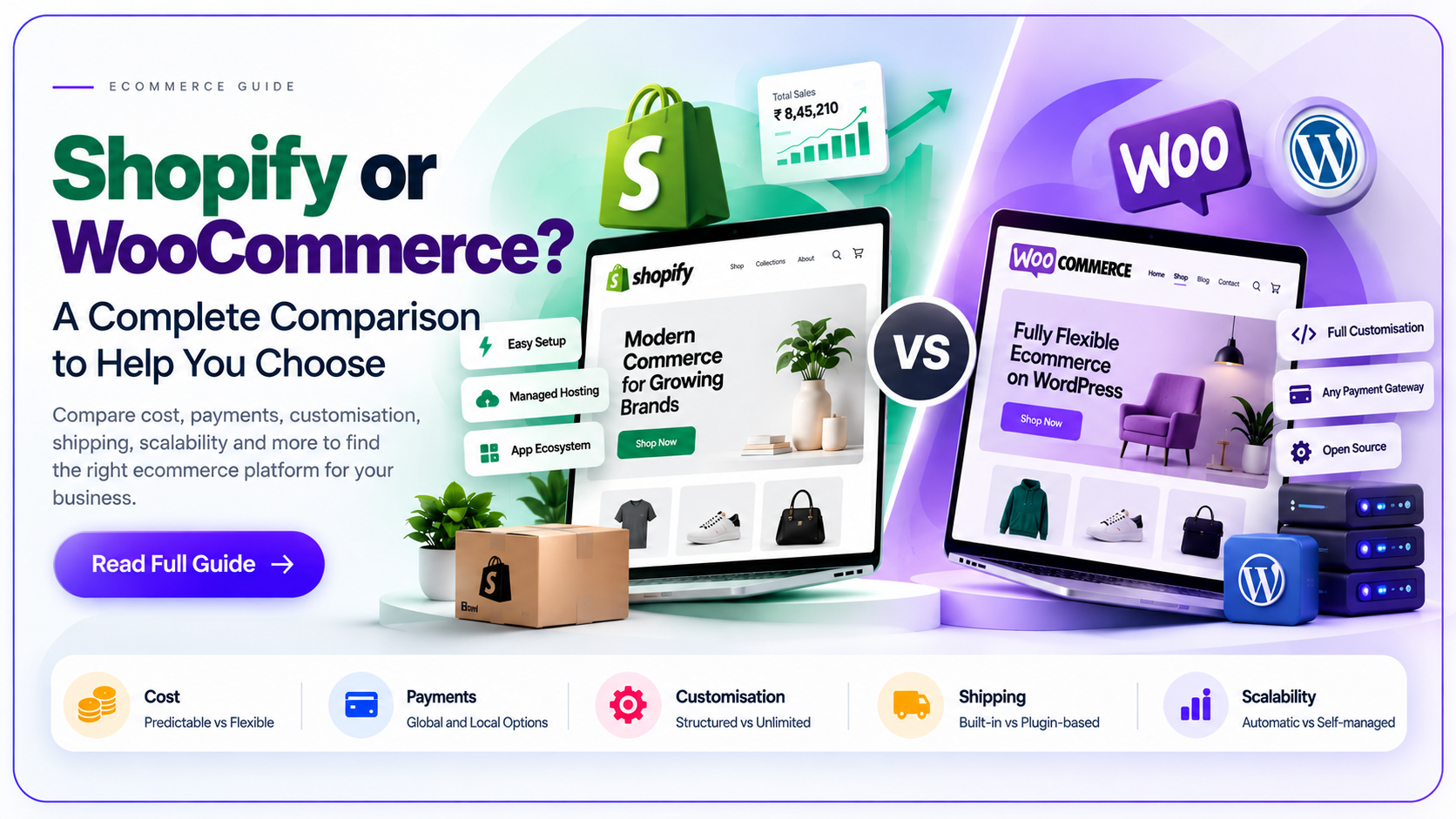
Shopify vs WooCommerce at a Glance
| Area | Shopify | WooCommerce |
|---|---|---|
| Model | Hosted, subscription-based | Open-source plugin for WordPress |
| Setup | Fast, guided, works out of the box | More hands-on, you choose hosting and plugins |
| Cost pattern | Predictable monthly plan plus apps and fees | Free core, pay for hosting, themes and extensions |
| Customisation | Structured themes and an app ecosystem | Near-unlimited, code-level freedom |
| Maintenance | Handled by Shopify | Handled by you or your developer |
| Scaling | Automatic infrastructure, higher tiers unlock features | Depends on hosting and optimisation |
1. Cost: Predictable vs Flexible
Shopify runs on tiered monthly subscriptions, with higher plans adding features such as more staff accounts and advanced reporting. The pricing is easy to understand, but the total grows over time through paid apps, premium themes and transaction fees when you use a payment gateway other than Shopify's own.
WooCommerce is free to install. Your spend comes from hosting, a theme, premium plugins and developer time. There are no forced plan upgrades, so you can keep costs low if you are comfortable managing your own setup.
Takeaway: Shopify offers predictability and simplicity. WooCommerce offers more control over long-term costs, especially when margins are tight and you have technical help available.
2. Payments and Localisation
Payments make or break checkout conversion, and customers expect to pay the way they are used to.
Shopify includes Shopify Payments for cards and digital wallets, but it is only available in selected countries. Where it is not offered, you connect a third-party gateway and Shopify typically adds its own transaction fee on top.
WooCommerce has its own payments solution as well, but its real advantage is openness. You can plug in almost any gateway without being penalised for it, whether global or local. For a business selling in India, that means being able to offer UPI, net banking, wallets and cards through the gateway that suits your customers best.
Takeaway: If local payment methods are central to your sales, check how each platform handles them before you commit.
3. Customisation and Control
Shopify takes a structured approach. You start from a theme and use a drag-and-drop editor to rearrange sections and adjust layouts without writing code. The App Store covers most extra features, and developers can go further using Shopify's Liquid templating language and APIs. The main limit is checkout customisation, which is reserved for Shopify Plus.
WooCommerce is the more open system. Because it sits on WordPress, building a custom plugin for an unusual business model is often quicker and cheaper than building a Shopify app. You can integrate any third-party service you like.
That freedom comes with responsibility. You must keep themes and plugins updated, make sure they stay compatible, and secure the site. A plugin conflict can break pages, and weak security practices leave you exposed.
Takeaway: Choose Shopify if you want things to just work. Choose WooCommerce if you want to shape every detail.
4. Shipping
Shopify includes built-in shipping tools such as label printing and discounted carrier rates, although availability depends on your region. Where those are limited, third-party apps fill the gap.
WooCommerce does not ship with shipping features out of the box, but its plugin ecosystem lets you connect virtually any carrier or logistics provider and build advanced rules, such as regional couriers or weight-based pricing. The trade-off is that you assemble the pieces yourself.
Takeaway: Shopify simplifies standard setups. WooCommerce suits businesses with specific logistics needs.
5. Scalability
Shopify handles hosting, performance and security for you. When traffic spikes, its infrastructure absorbs it automatically. The catch is that advanced capabilities, such as extra staff accounts, deeper reporting and checkout customisation, sit in higher-priced plans.
WooCommerce scales modularly. Capacity depends on your hosting and the work you put into caching, search and database tuning. You do not need to upgrade a plan to unlock features, but you or your developer must manage the technical side as volumes grow.
Takeaway: Shopify grows with you at a predictable but rising price. WooCommerce lets you scale on your own terms if you are ready to run the engine room.
How to Decide
Shopify is a strong fit if you want to launch quickly, prefer predictable pricing, and would rather spend time on products and marketing than on servers and updates.
WooCommerce is a strong fit if you value flexibility, need custom functionality, want freedom over payment gateways and shipping, and have the technical capacity to maintain your site.
In the end, the better platform is the one that matches your way of working. If you want simplicity, Shopify is hard to beat. If you want freedom, WooCommerce hands you the keys.
Frequently Asked Questions
Is Shopify better than WooCommerce for beginners? Generally yes. Shopify is hosted and guided, so you can launch without managing hosting, security or plugin compatibility.
Is WooCommerce really free? The plugin itself is free, but you will pay for hosting, a domain, themes, premium extensions and ongoing maintenance.
Can I switch platforms later? Yes. Products, customers and orders can be migrated, but it takes planning to protect your SEO and data, so it is best to choose carefully upfront.
Which platform is better for large catalogues? Both can handle them. Shopify manages scaling for you, while WooCommerce needs proper hosting and optimisation to perform well at volume.
Build Your Store with Teenva AI
Choosing the platform is only the first step. At Teenva AI & Digital Ventures, we help businesses design, build and scale ecommerce stores on both Shopify and WooCommerce, from theme and UI/UX design to payment gateway and shipping integrations, custom app and plugin development, and ongoing managed support.
Ready to get your store built the right way? Contact us at sales@teenvaai.com, call +91 9572020107, or visit teenvaai.com to talk through your project.