

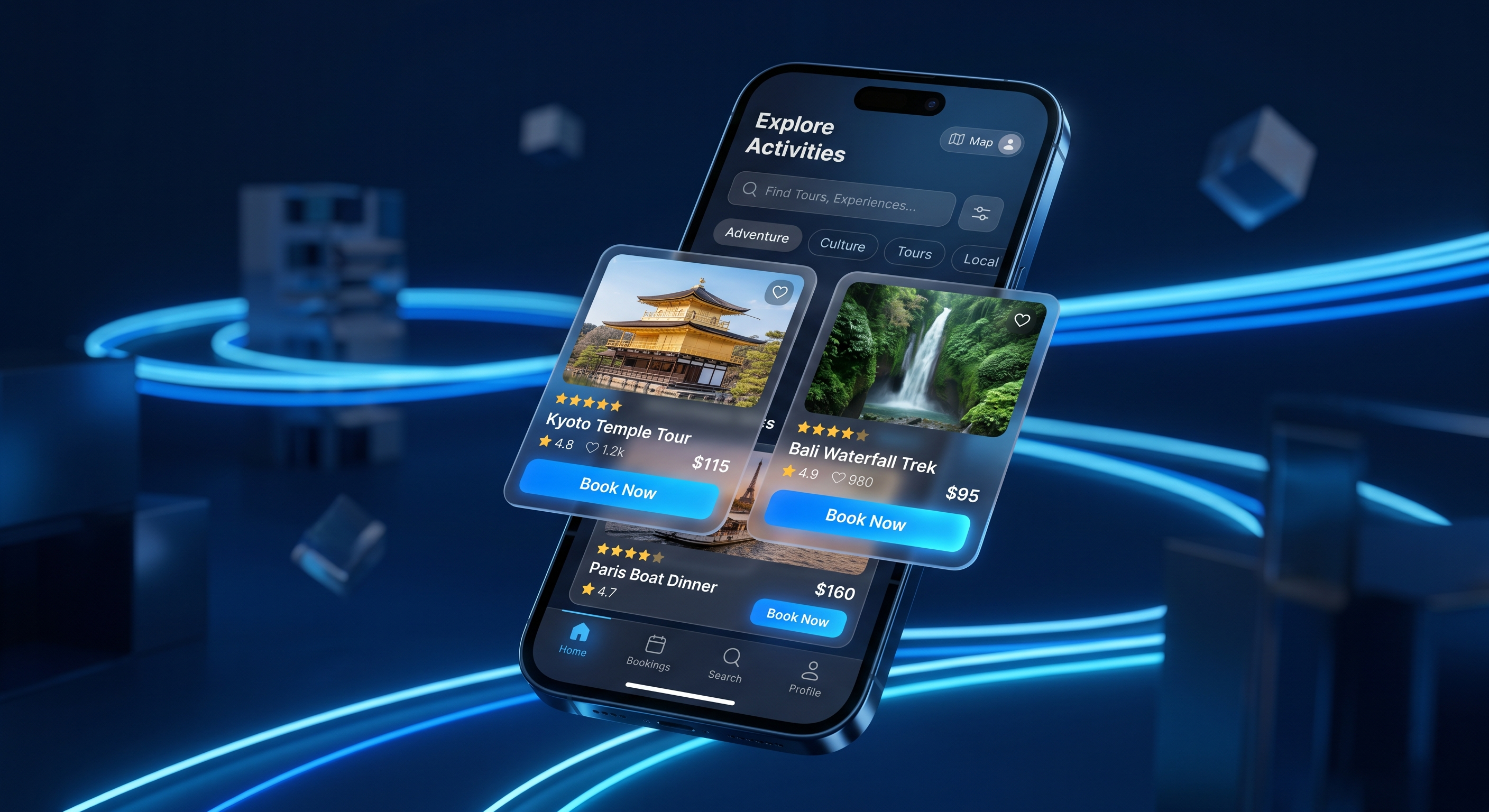
Case Study: Activities Booking Platform Built with Viator API
The travel industry has undergone a dramatic digital transformation over the last decade. Travelers no longer flip through brochures or call local tour desks — they search, compare, and book experiences from their phones in seconds. For travel businesses, this shift means one thing: if your platform doesn't offer instant, comprehensive activity booking, you are leaving significant revenue on the table.
This case study walks through the end-to-end development of a modern activities booking platform powered by the Viator API — one of the most robust tour and experience APIs available today. From architecture decisions to UX design challenges, we cover what it actually takes to build and launch a platform like this.
The Client Problem
Our client operated a mid-sized travel portal primarily focused on flight and hotel bookings. While they had steady traffic and repeat customers, user session data showed a consistent pattern: after booking accommodation, users would leave the platform to browse Google, TripAdvisor, or GetYourGuide for things to do at their destination.
That drop-off represented lost engagement and lost revenue. The client wanted to capture that demand on their own platform — without building an activity inventory from scratch, which would take years and cost a fortune.
The solution: integrate the Viator API to power a full-fledged activities and experiences booking layer directly within their existing travel portal.
Why Viator API?
The Viator API, backed by TripAdvisor, offers access to one of the largest curated inventories of tours, activities, and experiences globally — covering over 300,000 bookable products across 2,500+ destinations. For any platform looking to offer activities at scale without managing supplier relationships independently, it is the natural starting point.
Key reasons we chose Viator API for this project:
Massive inventory depth covering sightseeing tours, adventure activities, food experiences, cultural excursions, day trips, and more
Real-time availability and pricing ensuring users always see accurate, live data
Verified reviews and ratings from TripAdvisor lending instant credibility
Multi-currency and multi-language support enabling global scalability
Secure, instant booking confirmation reducing back-and-forth with suppliers
Platform Architecture Overview
Before writing a single line of code, we mapped out the platform architecture to ensure the system could handle real-world load, remain maintainable, and scale as the client's user base grew.

The backend acted as a smart middleware layer — handling authentication, caching frequent Viator responses (such as destination category data), and orchestrating payment and booking flows. The frontend was built with Next.js for server-side rendering, ensuring fast load times and strong SEO performance for destination and activity pages.
Key Features Built
1. Smart Destination & Activity Search
The search interface needed to feel effortless. Users can type a destination name, a type of experience (e.g., "sunset cruise in Santorini"), or even a mood-based query. The system queries the Viator API and returns results ranked by relevance, popularity, and user ratings.
Advanced filtering allowed users to narrow results by:
Price range
Duration (half-day, full-day, multi-day)
Category (adventure, culture, food, family-friendly, etc.)
Time of day (morning, afternoon, evening)
Language of the tour guide
Group size and private tour options

2. Rich Activity Detail Pages
Each activity listing page was designed to be a conversion machine. Pulling data from the Viator API, we populated every page with:
High-resolution activity images
Full itinerary and what-to-expect breakdown
Meeting point with embedded Google Maps integration
Inclusions and exclusions listed clearly
Cancellation policy displayed prominently
Real-time availability calendar
TripAdvisor-verified reviews and ratings
"Book Similar" recommendations powered by Viator's related products endpoint
The result was a page that gave users everything they needed to make a confident booking decision — without leaving the platform.
3. Real-Time Availability and Booking Engine
The most technically complex module was the booking engine. Real-time availability had to be fetched from the Viator API at the moment a user selected a date and group size, with the system holding a soft reservation while the user completed payment.
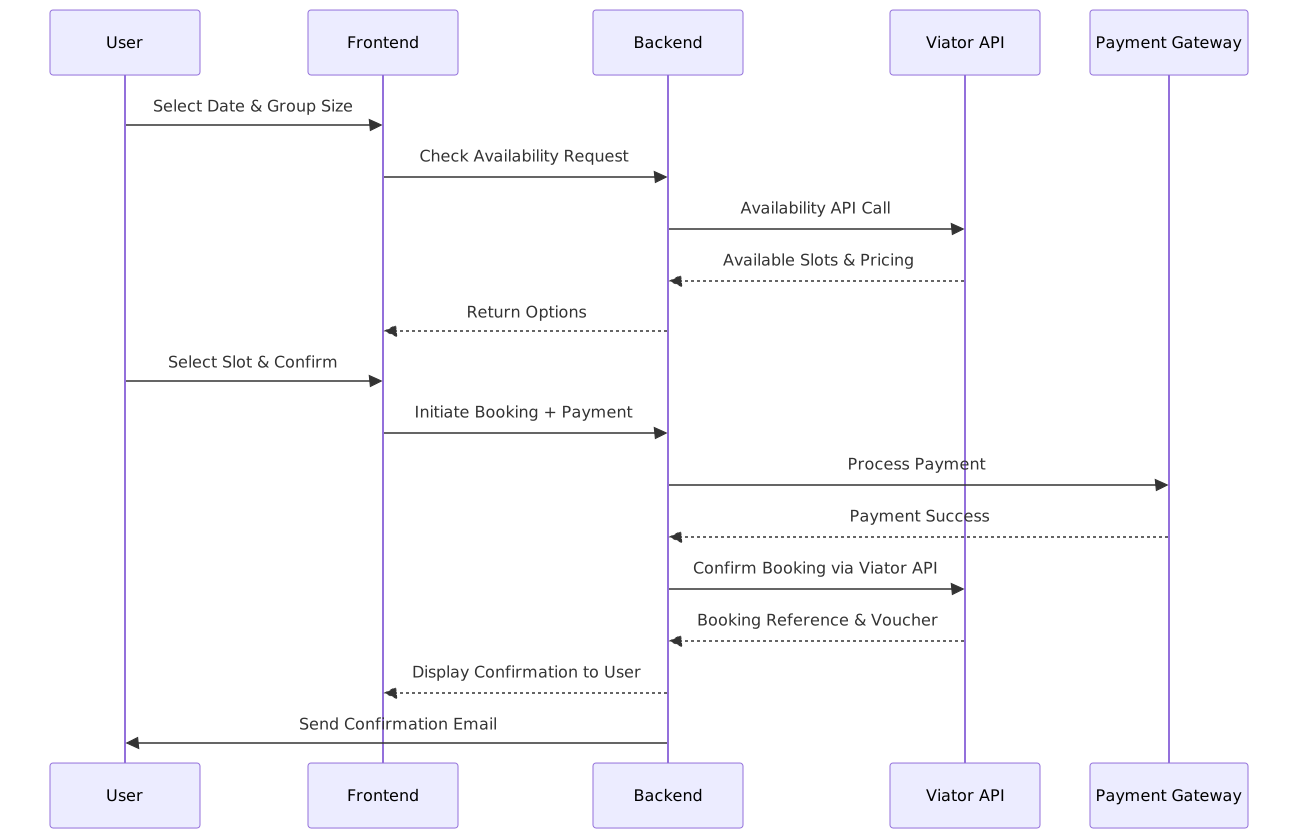
Error handling was built into every step. If availability changed between search and booking (a common scenario with popular tours), the system gracefully notified the user and surfaced alternative slots — rather than returning a generic error page.
4. User Dashboard and Booking History
Registered users got a personal dashboard where they could:
View upcoming and past bookings
Download e-vouchers (generated from Viator's booking confirmation data)
Cancel eligible bookings within the cancellation window (with automated refund triggers)
Save activities to a wishlist for future trips
Leave reviews that surfaced back through the platform
5. Personalized Recommendations Engine
Using a combination of user browsing history, past bookings, and destination affinity data, we built a lightweight recommendations layer on top of the Viator API. The system surfaced contextually relevant activities at every touchpoint — on the homepage, post-booking confirmation screen, and in email campaigns.

Design and UX Approach
One of the most important lessons from this project was that inventory alone does not convert. A platform can have access to 300,000 activities and still fail to sell them if the experience feels cluttered or confusing.
We applied these UX principles throughout:
Progressive disclosure — Show destination highlights first, then let users drill deeper into categories, then individual activities. Avoid overwhelming users with filters before they have formed any intent.
Confidence signals at every step — Cancellation policies, verified review counts, and clear pricing (including taxes and fees) were displayed at the search result level, not hidden until checkout. Removing surprise costs at checkout dramatically improved conversion rates.
Mobile-first design — Over 68% of the client's existing traffic came from mobile. Every interaction was designed and tested on mobile screens first, with desktop treated as an enhancement rather than the baseline.
Fast page loads — Viator API responses were strategically cached and prefetched based on destination data. Category pages for popular destinations loaded in under 1.5 seconds on average.
Challenges and How We Solved Them
API Rate Limiting and Latency
The Viator API, like any third-party API, has rate limits. For high-traffic scenarios (e.g., 200 concurrent users searching the same destination), naive implementations would hit rate ceilings quickly.
Our solution was a two-layer cache: a short-lived Redis cache for real-time search results (15-minute TTL) and a longer-lived PostgreSQL cache for destination metadata and category structures (refreshed every 24 hours). This reduced live API calls by approximately 70% during peak hours.
Handling Availability Volatility
Popular activities — particularly sunset cruises, skip-the-line museum entries, and small-group food tours — can sell out within hours. We implemented a lightweight inventory alerting system: when a user views an activity showing fewer than 5 slots remaining, a scarcity indicator is shown. This both informed users honestly and increased urgency-driven conversions.
Multi-Currency Checkout
The client's audience was international. We pulled pricing in local destination currencies from the Viator API but displayed amounts converted to the user's preferred currency (detected via IP and configurable in settings). Stripe handled multi-currency payment processing, with Viator receiving booking confirmations in the base currency.
Results After Launch
The platform went live after a four-month development timeline. Within the first 90 days post-launch:
Activity booking revenue accounted for 23% of total platform revenue (up from 0%)
Average session duration increased by 41% as users explored activity listings
Bounce rate on destination pages dropped by 29% — users stayed to explore rather than leaving for competitor platforms
Repeat booking rate grew by 18%, driven by the personalised recommendations engine surfacing relevant upsells post-trip
The client's platform transformed from a flight-and-hotel aggregator into a full-journey travel companion — covering the entire trip lifecycle from transport and accommodation to on-ground experiences.
Technology Stack Summary
Layer | Technology |
|---|---|
Frontend | Next.js (React), Tailwind CSS |
Backend | Node.js, Express.js |
Database | PostgreSQL, Redis (caching) |
API Integration | Viator API (REST) |
Payments | Stripe, Razorpay |
SendGrid | |
Hosting | AWS (EC2, RDS, ElastiCache) |
CDN | Cloudfront |
What This Case Study Teaches Us
Building an activities booking platform with the Viator API is not merely a technical exercise — it is a product design challenge. The API gives you the raw material: inventory, pricing, availability, reviews. What transforms that raw material into a revenue-generating platform is thoughtful architecture, smart caching, intuitive UX, and a booking flow that earns user trust at every step.
The most valuable lesson: integration quality matters more than integration speed. A poorly integrated API that returns slow results, breaks on edge cases, or hides important information from users will undermine even the best inventory. Get the foundations right, and the commercial results follow.
Build Your Own Activities Booking Platform with Teenva AI
At Teenva AI & Digital Ventures, we specialize in building travel technology platforms that go beyond basic integrations. Whether you are looking to add activity booking to an existing travel portal, build a niche experience marketplace, or develop a full-stack travel platform from the ground up, our team has the expertise to deliver.
We work with APIs including Viator, GDS systems, hotel booking engines, and payment gateways — architecting solutions that are scalable, fast, and built to convert.
Ready to build something remarkable?
Email: sales@teenvaai.com
Phone: +91 9572020107
Website: teenvaai.com
Let's turn your travel platform idea into a live, revenue-generating product.
